FaceKey™ Access Control
Identify the Person. Not the Credential.
- Cards can be lost.
- PINs can be shared.
- Keys can be copied.
FaceKey verifies the individual.
For over two decades, FaceKey™ has delivered biometric access control systems that replace transferable credentials such as cards, PINs and keys with true identity — improving security, accountability, and cost control.
Why Organizations Choose FaceKey
- Real Identity Verification
- Face and/or fingerprint recognition ensure that the person requesting entry is authorized to access the facility. Traditional systems that use cards, PINs, keys cannot ensure that only authorized persons have access.
- No badge swapping.
- No shared PINs.
- No rekeying costs.
Lower Installation Costs
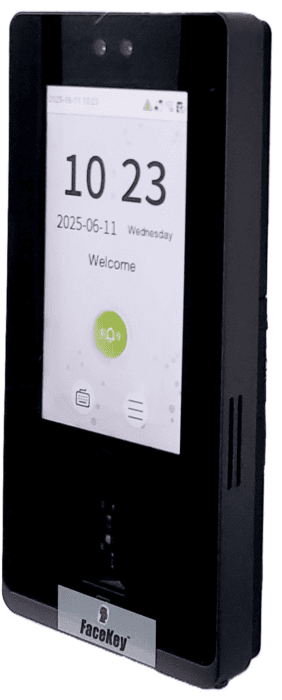
FaceKey™ operates on a modern IP network architecture. The access control panel is embedded inside the reader.
- Connects directly to your network.
- Centralized management.
- Minimal cabling.
- Reduced labor requirements.
- Fewer components. Faster installs.
- Centralized Control
Administrators can:
- Add or remove users instantly
- Assign door-level permissions
- Set schedules
- Monitor activity in real time
- Search event logs by user, time, or location
If communication is interrupted, each door will continue to operate and will sync automatically when communication is restored.
How the System Works
- Enroll user face and/or fingerprints.
- User presents biometric credential.
- System verifies identity and permission.
- Door unlocks.
- Event is recorded.
- Simple. Reliable. Auditable.
- Multi-Factor Security Available
Supports:Face, Fingerprint, PIN, or Card (optional). Two or three-factor authentication is available when required.
Built for Real Facilities
Deployed in: Banks, Healthcare, Data centers, Government, Manufacturing, Schools, Food processing, Warehouses. or Smart Homes
Where identity matters, the FaceKey™ system performs.
The Bottom Line
Traditional systems manage credentials – Cards, PINs, and Keys.
FaceKey™ verifies identity and prevents access by unauthorized persons.
That difference strengthens security, reduces administrative burden, and lowers long-term infrastructure cost.